How to Choose a Printing Service: A Buyer's Checklist for Print and Mail
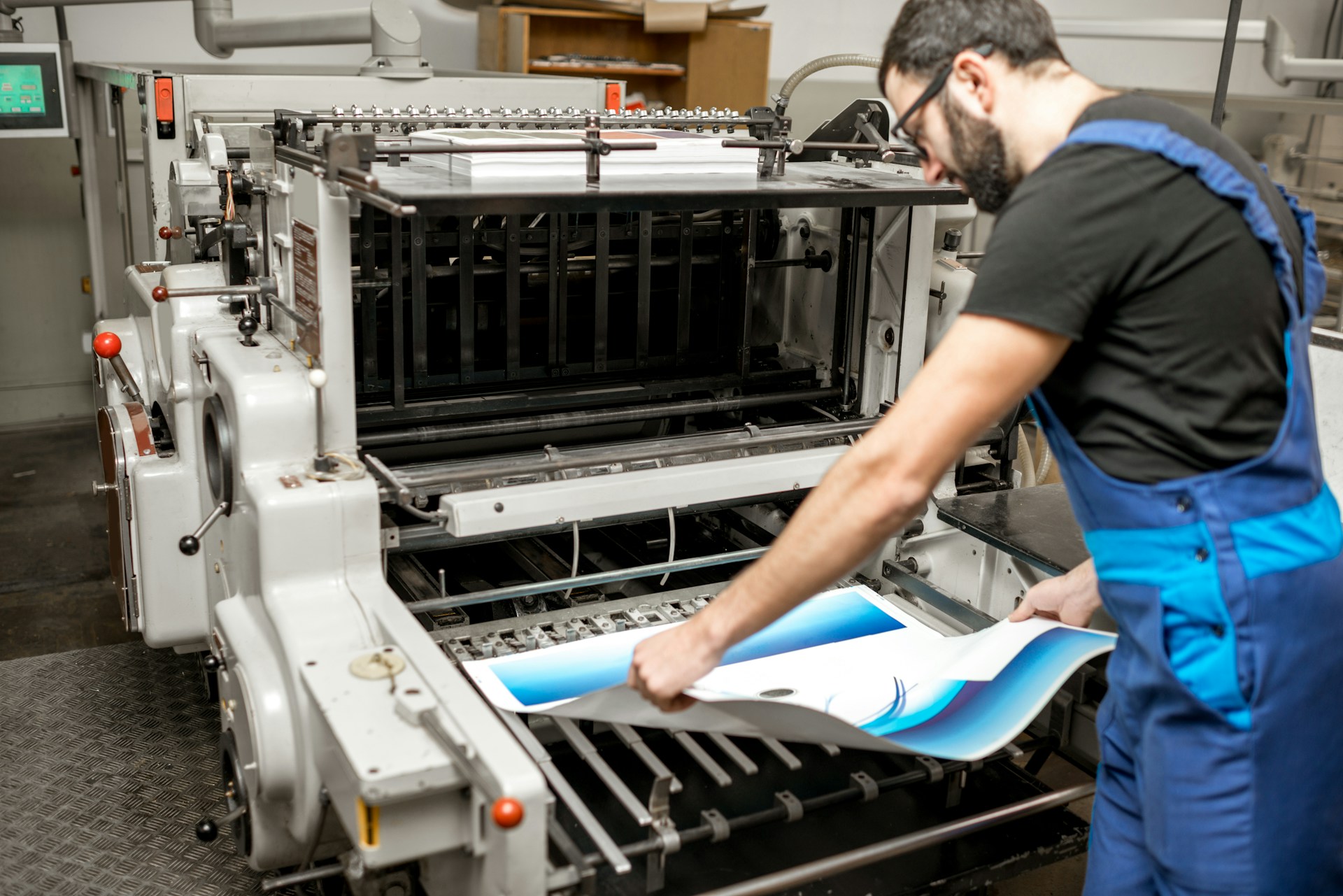
Most printing decisions go wrong before anyone looks at a proof. A business picks a vendor on price per thousand, then discovers the quote covered printing and nothing else: no addressing, no presort, no postal paperwork, no plan for the two weeks between "files approved" and "mail in homes." The reprint and the missed in-home date cost more than the savings ever did.
Knowing how to choose a printing service means judging the whole job, not the sheet. This guide walks the criteria that actually predict a good outcome, what drives the number on a quote, the questions worth asking before you commit, and the red flags that should end a conversation early.
Mail Processing Associates has printed and mailed from a single Lakeland, Florida production facility since 1989. The checklist below is the one we would hand a marketing director who has to get a campaign out the door on a fixed date.
Need a quote on a specific job? Request pricing with your quantity, format, and target in-home date, and we will come back with an itemized number.
Start With the Full Job, Not Just the Print
Before comparing vendors, write down everything that has to happen between your file and your reader. For a printed piece that stays in the office, that list is short. For anything mailed, it is long, and every item on it is a place a job can stall.
A typical mailed campaign runs: file preflight, proof, print, finishing, addressing, list hygiene, presort, postal paperwork, and physical entry into the postal stream. A print-only vendor owns four of those nine steps: preflight, proof, print, and finishing. Choosing a printing service starts with deciding how many of the nine you want to own yourself.
Print-Only, Print-and-Mail, or Full-Service
Three vendor shapes exist, and they are not interchangeable.
Print-only shops produce the piece and hand you boxes. They suit trade-show collateral, in-store signage, and anything your team distributes. They are the wrong choice for a mailed campaign unless you already have a mail partner and enjoy coordinating two vendors against one deadline.
Print-and-mail providers print, address, and deposit mail with the postal service. This is the shape that fits most direct mail, statements, notices, and appeals.
Full-service providers add list acquisition on the front end and fulfillment on the back: sourcing the list itself, then kitting, warehousing, and reorders. The hygiene steps above stay part of any competent print-and-mail job. For recurring programs, that front-end data work is usually where the real money is saved.
The Criteria That Actually Predict a Good Outcome
Vendor websites all claim quality, service, and competitive pricing. These are the criteria that separate them.
In-House Production Versus Handoffs
Ask which steps happen in the building you are standing in. Every handoff between facilities adds a file transfer, a day, and a party who can blame the other party when something is wrong.
A single-facility provider can catch a bad address file on Monday and still hit a Friday postal entry. A multi-site chain usually cannot, because the fix has to travel. We run data, press, bindery, inserting, and postal entry under one roof precisely so that the recovery path is short.
Equipment Range, Digital and Offset
Range matters more than any single machine. Digital presses make short runs and variable data economical; offset earns its keep on long runs of the same piece.
A provider with both can route your job to whichever is cheaper at your quantity instead of selling you the one they own. Ask which method they would use for your run length and why. A vendor who cannot answer that in plain language is guessing, and you will pay for the guess.
Color Management and Proofing
Ask what the proof actually is. A PDF on your monitor proves content and layout; it proves nothing about ink on your paper.
For color-critical work, ask for a proof produced on the press and stock that will run the job, and ask whether they profile their presses to a published standard. Then ask for paper samples with your quote so you are judging the finish in your hand rather than on a screen.
Mailing Capability and Postal Credentials
This is the criterion most buyer guides skip, and it is the one that moves budgets most. Printing is a line item you can shop; postage is usually the largest single cost in a mailed campaign, and it is set by how well the mail is prepared.
Ask three specific questions. Does the provider hold its own mailing permit, or does it hand your mail to someone who does? Where is the mail physically entered? Does it apply the Intelligent Mail barcode and give you the tracking that comes with it?
We hold our own USPS mailing permit and enter mail at the Lakeland Business Mail Entry Unit, and we can also enter at the Tampa or Mid-Florida processing and distribution centers when a job geography favors it. Entering our own mail is what lets us commit to a date rather than estimate one.
Data Handling and List Hygiene
Postage is charged on every piece, including the pieces that were never going to arrive. A provider who runs address standardization, move updates, and duplicate suppression before the press runs is reducing your postage bill, not padding an invoice.
Ask whether list processing is included or billed separately, and ask what the provider does with a file that arrives dirty. "We run it as supplied" is a real answer, and it is the wrong one. If the work involves patient, donor, or financial records, ask how the data is handled and what the provider can document about it.
Turnaround You Can Plan Around
"Rush available" is not a schedule. Ask for the standard production window for your format and quantity, in business days, and ask what the provider needs from you to hold it.
Then ask the question that actually matters for mail: what is the last date files can arrive and still hit a given in-home window? A provider who answers with a date instead of a range understands its own capacity. Postal transit sits on top of production, so build the plan backward from the in-home date and treat the entry date as the deadline.
Quoting Transparency
Get the quote itemized. Printing, finishing, addressing, list processing, inserting, and postage should appear as separate lines, because that is the only way to compare two vendors or to see which lever to pull when a budget tightens.
A single bundled number is not a better deal; it is a number you cannot audit. If postage is folded into a per-piece price with no breakout, you cannot tell whether the provider is presorting well or simply marking postage up.
Comparing two quotes right now? Send us both specs and we will tell you which line items are missing. Get an itemized quote.
What Printing Costs and What Drives the Number
Print pricing is driven by a short list of variables. Understanding them lets you move a quote without guessing.
| Cost driver | Effect on price | What to do about it |
|---|---|---|
| Quantity | Setup spreads across the run, so per-piece cost falls as volume rises | Ask for pricing at your quantity and the next tier up |
| Print method | Digital wins on short runs and variable data; offset wins on long runs | Let the provider route it rather than specifying the press |
| Ink coverage | Full-bleed and heavy solids cost more than light coverage | Reduce flood coverage if budget is tight and the design allows |
| Paper stock and finish | Weight, coating, and specialty finishes move the number materially | Ask what the shop runs regularly; house stocks price better |
| Format and size | Sizes that fit press and postal maximums cost less to produce and mail | Confirm the size qualifies for the postage tier you want |
| Finishing | Folding, tabbing, scoring, and binding add passes | Ask which finishing steps your format actually requires |
| Variable data | Personalization adds a setup step, not a per-piece penalty | Worth it when the offer or audience genuinely differs |
Two notes on comparing numbers. First, make sure both quotes assume the same stock, because a lighter sheet quietly undercuts a heavier one. Second, confirm whether the price includes the file preflight; a provider who charges to fix a bad file should say so up front.
Postage Is the Other Half of the Budget
For mailed work, postage frequently exceeds print cost. It is set by mail class, by how deeply the mail is presorted, and by whether the piece is machinable.
Presort depth is the lever. Mail prepared to a finer sort pays less, which is why the provider postal capability is a pricing question and not a logistics footnote. Current commercial presort prices for a one-ounce letter run as follows.
| Mail class and tier | Per-piece rate |
|---|---|
| First-Class Mail letter, 5-Digit automation | $0.621 |
| First-Class Mail letter, 3-Digit automation | $0.672 |
| First-Class Mail letter, Mixed | $0.707 |
| USPS Marketing Mail letter, 5-Digit automation | $0.395 |
| USPS Marketing Mail letter, 3-Digit automation | $0.435 |
| USPS Marketing Mail letter, Mixed | $0.467 |
Source: USPS Notice 123 (Price List), effective July 12, 2026.
Read that table as a range of outcomes rather than a price you pick. Most lists do not qualify for the deepest tier, so plan on the Mixed figure and treat anything better as savings the presort earned. USPS Marketing Mail letter Mixed pricing is $0.467 per piece, and First-Class Mail letter Mixed pricing is $0.707 per piece, so the class decision alone moves a 25,000-piece letter campaign by roughly $6,000.
Two other postage facts belong in a vendor conversation. Nonprofit organizations with postal authorization mail letters at a nonprofit rate, where Mixed pricing is $0.257 per piece. And a letter that cannot run through postal automation equipment picks up a nonmachinable surcharge of $0.49, which is why asking whether your format is machinable before you print it is worth the phone call.
Delivery timing follows the class, and it starts when the postal service takes custody rather than when the press stops. First-Class Mail delivers in 3 to 5 business days after USPS entry. USPS Marketing Mail runs 3 to 10 business days and is not guaranteed.
Matching the Provider to the Job: One-Off Versus Recurring
How to choose a printing service also depends on whether this is a single campaign or a program that repeats. The two buying decisions reward different things, and a vendor that is excellent at one can be a poor fit for the other.
One-Off Campaigns
For a single drop, weight the evaluation toward responsiveness and schedule certainty. You need a provider who will answer the file-deadline question precisely, hold a press window, and flag a problem the day it appears rather than the day before entry.
Deep data infrastructure matters less here, because the list is usually supplied once and used once. What matters is that the provider catches a bad file before it becomes a bad mailing.
Recurring Programs
For statements, notices, renewals, or a quarterly appeal, the calculation inverts. Setup cost amortizes across cycles, so the questions worth asking are about repeatability.
Ask whether the provider can store your templates and stocks, whether it keeps a standing list-hygiene routine between cycles, and whether the same project manager owns the job every month. Ask what happens when your file format changes, because it eventually will.
Also ask about reporting. A recurring program should produce a per-cycle record of what mailed, what was suppressed, what was undeliverable, and when the mail entered, because that record is how you find a problem that has been quietly costing you postage for three cycles.
Mixed Volume Across the Year
Many organizations have both: a steady monthly program plus seasonal spikes. The relevant question is whether one provider can absorb the spike without displacing the routine work.
Ask how the provider schedules a peak period and whether routine jobs get pushed when a large campaign lands. A shop that cannot answer that will answer it for you in December. For organizations with both patterns, consolidating with one provider is usually what makes the peak survivable, because capacity decisions are made against your full year rather than against one purchase order.
Red Flags When Evaluating a Printing Service
Some answers should end the evaluation.
- A price before any questions. A provider who quotes before knowing your quantity, stock, format, and mail class is quoting a different job than yours.
- Vagueness about where the work happens. If you cannot get a clear answer about which steps are performed in-house, assume handoffs and price the risk accordingly.
- Postage folded into a bundled per-piece number. Without a postage line you cannot evaluate presort quality or detect a markup.
- No proof step for color-critical work. A vendor who treats a screen PDF as the final proof on a brand-color job is transferring risk to you.
- A turnaround promise with no file deadline attached. Production time only means something paired with the date your files have to land.
- No answer on data handling for regulated work. For patient, donor, or financial data, "we will take care of it" is not documentation.
Questions to Ask Before You Commit
Bring this list to the call.
- Which production steps happen in your building, and which do not?
- What print method would you use at my quantity, and what changes at the next tier?
- What exactly is the proof, and can I get one on my stock?
- Do you hold your own mailing permit, and where is my mail physically entered?
- Is address standardization and move updating included, or billed separately?
- What is the last date you need files to hit my in-home window?
- Can I see the quote itemized, with postage on its own line?
- What happens, and what does it cost, if my file arrives with problems?
The answers tell you more than any portfolio. A provider who answers all eight crisply has done this enough to know its own numbers. That is the practical shortcut for how to choose a printing service: ask operational questions and listen for whether the answers contain dates and dollars.
How to Choose a Printing Service for a Mailed Campaign
When the piece is going in the mail, collapse the evaluation to one test: can this provider own the job from data to postal entry, and will it commit to a date?
That test eliminates most shops quickly, and it is the right test, because mailed campaigns fail on coordination far more often than on print quality. A beautiful postcard that enters the postal stream nine days late is a failed campaign.
Mail Processing Associates has served more than 700 lifetime business customers and mails for organizations in all 50 states from one Lakeland facility, with 5.0 stars across 100+ verified Google reviews. We print, address, presort, and enter our own mail, which is why we quote a date rather than a window.
If you want the longer technical view, our commercial printing services guide covers formats and methods in more depth, printing and mailing services covers the combined workflow, and mailing services covers presort and postal entry specifically. Run your artwork through the free file check before you send it anywhere, including to us.
Ready to price a job? Request an itemized quote or call 863-687-6945. Most quotes come back within one business day.
Frequently Asked Questions
How do I choose a printing service for a mailed campaign?
Judge the whole job rather than the print line. Confirm the provider holds its own mailing permit, ask where your mail is physically entered, require an itemized quote with postage on its own line, and get the last date files can arrive and still hit your in-home window. A provider who answers those four crisply can usually be trusted with the date.
What should a printing quote include?
Separate lines for printing, finishing, addressing, list processing, inserting, and postage. A bundled per-piece number cannot be audited or compared, and it hides whether the provider is presorting well. Ask for the same spec from every vendor so the comparison is real.
Is it cheaper to use one vendor for printing and mailing?
Usually, and the savings are mostly in postage and time rather than print. A provider that does its own data hygiene and presort reduces the number of pieces mailed and the rate paid on the ones that go, and a single facility removes the handoff days that push campaigns past their in-home dates.
How far ahead should I book a print and mail job?
Work backward from the in-home date through postal transit, entry, presort, addressing, production, and proofing. First-Class Mail delivers in 3 to 5 business days after USPS entry and USPS Marketing Mail runs 3 to 10 business days, so transit alone can consume two weeks on the long end. Ask the provider for the file deadline rather than the production time.
Does the printing company handle the design?
Yes, on request. Most customers send a print-ready PDF, or start from a free template on the design templates hub and run it through the free file check. If you need help getting the file ready, mention it when you request a quote and we will scope it with the job.
How do I compare printing quotes that look very different?
Normalize the spec first. Confirm both quotes assume the same stock weight, the same finishing steps, the same mail class, and the same quantity, then compare line by line. Most large gaps between quotes turn out to be a lighter sheet, a missing addressing line, or postage that one vendor included and the other did not.
What is the minimum quantity for a print and mail job?
It depends on the mail class rather than the press. USPS Marketing Mail requires 200 pieces or 50 pounds to mail at presort prices, and First-Class Mail presort requires 500 pieces, so the postal minimum usually sets the floor for a mailed campaign rather than the print run.
Alec Boye, President, Mail Processing Associates
"After 35+ years of MPA running presses, the lesson that sticks is that file preparation decides a job before the press does. Most reprints trace back to a file issue that takes minutes to catch up front. That is why every customer file gets a press-readiness check before it touches a machine."
Alec Boye, President, Mail Processing Associates