Paper Finishes for Direct Mail: Gloss, Matte, Satin, and Uncoated
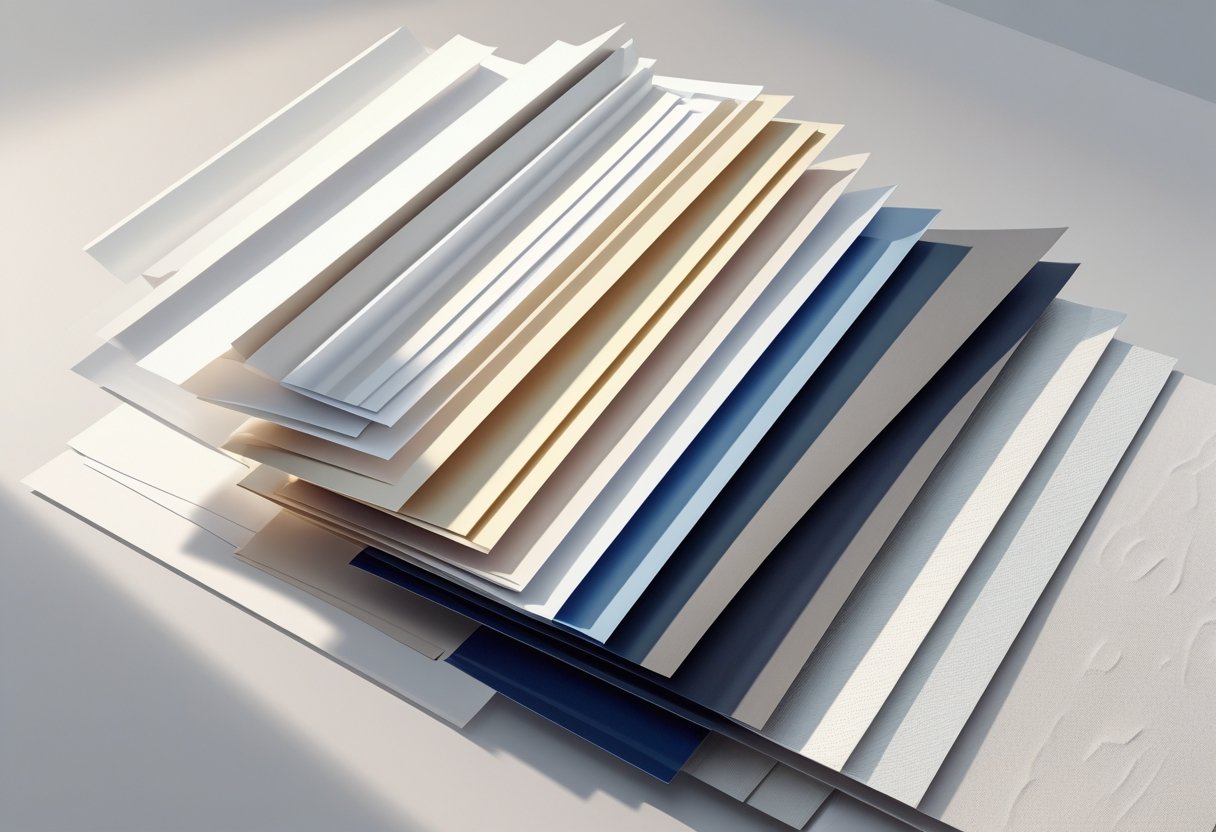
Paper finishes for direct mail usually get decided in a design review. On a mail job they are a production decision. The coating on a sheet determines whether an inkjet head can address it, whether the piece reads cleanly on a USPS sorter, and sometimes which postage tier it lands in.
This guide covers the four finishes that actually show up on mail work, what each one costs you downstream, and the two constraints that decide the answer more often than looks do: addressing and automation.
What Paper Finish Is Best for Direct Mail?
For most direct mail, a matte or satin aqueous coating is the safest choice. It protects the sheet, keeps color strong, reads cleanly under an optical scanner, and accepts inkjet addressing without special handling. Gloss and UV coatings look sharper on photo-driven postcards, but they repel water-based inkjet ink, so the address panel has to be knocked out of the coating or the piece has to be addressed before it is coated. Uncoated stock is the right call when the recipient is meant to write on the piece, or when a letter needs to feel personal rather than promotional.
Send us the piece size, quantity, and mail class and we will quote the printing, data, mail services, and postage as separate lines. Request a quote.
The Four Finishes That Matter on a Mail Job
Printers list dozens of surface options. The paper finishes for direct mail that actually matter narrow to four families. Everything else either cannot be addressed reliably or cannot be produced at mailing volumes without adding days to the schedule.
Gloss and UV gloss
A gloss finish is a reflective coating that deepens color and sharpens photographic detail. It is the reason a real estate postcard or a restaurant menu card looks saturated instead of flat. Gloss also resists moisture and scuffing in transit, which matters for a piece that travels loose through the mail stream rather than inside an envelope.
The trade-off is glare and ink adhesion. Body copy on a high-gloss sheet is harder to read under overhead light, and fingerprints show. UV coating takes both the shine and the problem further: it cures to a hard, non-porous film that water-based inkjet ink will not absorb into, so an address printed on top of it smears or beads.
Matte
A matte finish is a non-reflective coating that cuts glare and keeps text legible. It is the default for text-heavy pieces, anything with a lot of small type, and any mailer where the recipient has to read numbers accurately, such as a statement insert or an appeal with ask amounts.
Matte hides fingerprints better than gloss and gives the sheet a softer hand. Color sits slightly flatter than it does on gloss, which is a real consideration if the piece is carrying product photography.
Satin and silk
Satin, sometimes sold as silk, is the middle option. It has a low sheen that holds color better than matte without the glare of gloss. For a mailer that has to do both jobs at once, a photo on the front and a block of copy on the back, satin is usually the pick that requires the fewest compromises.
Uncoated
Uncoated stock has no surface coating at all. Ink soaks into the fiber, so color reads softer and the sheet feels like writing paper. That is exactly the point for nonprofit appeals, invitations, reply devices, and anything the recipient is supposed to fill out and send back. A ballpoint pen will not write on gloss.
Uncoated is also the most forgiving stock for addressing, because it absorbs inkjet ink immediately. If a job is heavily personalized and the schedule is tight, uncoated removes an entire category of production risk.
| Finish | Best for | Accepts inkjet addressing | Watch out for |
|---|---|---|---|
| Gloss (aqueous) | Photo-driven postcards, product cards | Usually, with a matte or uncoated address panel | Glare on body copy, fingerprints |
| UV gloss | Premium cards, high-abrasion pieces | No, requires a coating knockout | Ink beads on the cured film, adds a pass |
| Matte (aqueous) | Text-heavy mailers, statements, appeals | Yes | Color reads flatter than gloss |
| Satin / silk | Mixed photo and copy, self-mailers | Yes | Costs slightly more than matte |
| Uncoated | Appeals, invitations, reply devices | Yes, best in class | Softer color, less moisture resistance |
The Constraint Most Paper Guides Skip: Inkjet Addressing
Every guide to paper finishes for direct mail talks about how a sheet looks. Almost none of them mention the step that comes after printing, which is putting a name, an address, and an Intelligent Mail barcode on the piece.
Why coated stock fights the addressing head
Production inkjet addressing uses water-based ink. It needs a surface that will absorb that ink so it dries before the piece hits the next roller. Uncoated and aqueous-coated stocks absorb it.
UV coating and film lamination do not, because they cure into a sealed plastic layer. Ink sits on the surface, smears on contact, and the address ends up illegible.
An illegible address is not a cosmetic problem. USPS automation reads the address block and the barcode optically, so a smeared or low-contrast address panel is what turns an automation-rate piece into a manual handling problem.
How to spec a coated piece that still has to be addressed
There are three clean ways to keep a glossy look and still address the piece reliably:
- Knock the coating out of the address panel. The art file carries a coating layer with the address area masked, so that rectangle prints uncoated while the rest of the piece stays glossy. This is the most common solution and it costs nothing extra at print time if it is built into the file from the start.
- Address before coating. Workable, but it means the variable data has to be final before the piece goes to press, which removes the flexibility of addressing late in the schedule.
- Switch the whole piece to aqueous matte or satin. Simplest option, and for most mailers the visual difference is smaller than they expect.
The reason to settle this early is that it is a file change, not a press change. Catching it at the quote stage costs nothing. Catching it after the job is printed means a reprint or a labeling workaround.
Finish, Thickness, and What USPS Charges You
Paper choice is where print cost and postage cost touch each other. Coating adds almost nothing to the weight of a sheet, but the stock you pick to carry that coating decides the caliper, and caliper decides which USPS category the piece falls into.
The card ceiling
To mail at card pricing, a piece has to be no larger than 4.25 by 6 inches and between 0.007 and 0.016 inch thick. That range is a hard edge, not a guideline. A 5 by 7 card, which most marketers still call a postcard, exceeds the 4.25 by 6 card maximum, so USPS prices it as a letter.
The thickness floor matters in the other direction. A card printed on stock that is too thin does not qualify for card pricing at all, and lightweight coated sheets are exactly where that happens. Larger cards mailing at letter rates need to clear 0.009 inch.
When a piece falls out of automation
Letter-size mail has to stay within 6.125 inches high, 11.5 inches long, and 0.25 inch thick to be a letter. A piece has to exceed at least one of those maximums before USPS treats it as a flat, so a 6 by 9 card is still a letter on height even though it is longer than a standard envelope.
Pieces that are too rigid, too floppy, or unevenly thick get pulled off automation and pick up the $0.49 First-Class nonmachinable letter surcharge. Heavy uncoated cover stock and folded self-mailers that are not tabbed correctly are the two most common causes we see.
| Format | Size and caliper rule | Presort postage per piece |
|---|---|---|
| Card at card pricing | Up to 4.25 by 6 in, 0.007 to 0.016 in thick | First-Class Mail Presort Postcard Mixed is $0.495 |
| Larger card or letter, First-Class | Up to 6.125 by 11.5 by 0.25 in, at least 0.009 in | First-Class Mail Presort Letter Mixed is $0.707 |
| Letter-size promotional mail | Same letter envelope as above | USPS Marketing Mail Letter Presort Mixed is $0.467 |
| Nonprofit letter | Same letter envelope, nonprofit authorization required | Nonprofit Marketing Mail Letter Presort Mixed is $0.257 |
| Catalog or newsletter as a flat | Exceeds at least one letter maximum | USPS Marketing Mail Flat Presort Mixed is $1.26 |
Source: USPS Notice 123 (Price List), effective July 12, 2026. Mixed is the entry presort tier; a deeper sort prices lower and we pass that through at the USPS amount. For the full rate picture see our direct mail postage rates guide.
Matching Finish to Format
Postcards
Postcards carry the widest finish range because they mail naked, with no envelope protecting them. Gloss or satin on the image side gives the color impact the format is built for, and the address side should stay matte or uncoated so it addresses cleanly and scans reliably.
Weight matters more than most people expect. A card that feels flimsy in the hand undercuts the offer printed on it. A card under the caliper floor does not qualify for card pricing at all, which is covered in more depth in our guide to choosing the right paper stock for business mailers.
Letters and folded self-mailers
Letters inside envelopes rarely need coating at all. The envelope does the protecting, and uncoated text stock reads as correspondence rather than advertising, which is the effect most appeal and renewal mail is going for.
Folded self-mailers are the format where finish and postal rules collide hardest. The fold has to be positioned correctly, the open edge has to be tabbed or wafer-sealed, and a slick coated surface can make tab adhesion less reliable. We run tabbing and wafer-sealing in house as part of our lettershop services, so a self-mailer gets specced against the sealing requirement before it goes to press, not after.
Catalogs, brochures, and newsletters
Multi-page work usually mixes finishes by function. A coated cover takes the handling, and an uncoated or matte text block keeps the interior readable and holds the book flatter. Saddle-stitched books run on our Horizon StitchLiner Mark III, and perfect-bound work runs on a Sterling DigiBinder, both in the same Lakeland plant that meters the mail.
Cost, Sustainability, and Turnaround
Aqueous coating is applied inline while the sheet is already on press, so it adds very little to a print bill and effectively nothing to the schedule. It is the reason matte and satin aqueous are the practical default on volume mail work.
UV coating is a separate operation. It costs more per piece and it adds a pass, which is a real consideration when the mail date is fixed and the list is already built. Specialty treatments such as embossing, foil, and soft-touch lamination look excellent and belong on pieces where the format itself is the message, but each one adds handling time and each one has to be checked against the addressing plan.
On recyclability, aqueous coatings are water based and recycle through standard paper streams. UV coatings and film lamination are harder to process, so a mailer with a sustainability commitment in its brand guidelines is usually better served by an uncoated or aqueous-matte sheet.
Most jobs move through our floor in 3 to 5 business days for First-Class mail once files and data are approved, and finish choice is one of the few variables that can quietly add a day to that.
How We Spec Finish on a Mail Job
Choosing among paper finishes for direct mail works backward from the mail plan, not forward from the design. The order is mail class and format first. Then caliper and size against the USPS thresholds, then addressing method, and only then the coating that fits inside all three.
Data comes first in practice. On a typical consumer file about 94% of records pass CASS and DPV address validation, and of those validated records about 98.5% are deliverable after NCOA processing. Clean data is what makes the presort tiers in the table above reachable at all, because automation pricing depends on addresses that USPS can actually match.
Printing runs on Xerox Iridesse and Xerox Versant presses for color work and a Xerox Nuvera for black and white, with inkjet addressing, tabbing, inserting, presort, and induction at the Lakeland Business Mail Entry Unit handled by the same team on the same floor. More than 700 lifetime business customers have run work through that floor, and mail goes out to all 50 states from the single Lakeland facility.
When printing and mailing happen in one operation, the person choosing the coating already knows how the piece will be addressed and how it will be sorted.
Split those steps across two vendors and the coating gets chosen without that information. The address panel problem then surfaces after the job is already printed, which is the expensive moment to find it. Running the whole job through full-service direct mail is how that gap closes.
Have a piece already designed? Send the print-ready PDF and your quantity and we will flag any finish, caliper, or addressing conflict before it goes to press. Get a quote.
Frequently Asked Questions
What is the best paper finish for direct mail postcards?
Satin or matte aqueous on the address side and gloss or satin on the image side is the most reliable combination. It gives you strong color where the offer lives and a surface that inkjet addressing and USPS scanners can both handle where the address lives.
Can you print addresses on glossy or UV-coated paper?
Not directly on UV coating or lamination, because water-based inkjet ink will not absorb into a cured film and will smear. The fix is to knock the coating out of the address panel so that area prints uncoated, to address the piece before coating, or to move the whole piece to an aqueous matte or satin finish.
Does paper finish change my postage cost?
The coating itself does not, but the stock carrying it does. Card pricing requires a piece no larger than 4.25 by 6 inches and between 0.007 and 0.016 inch thick, and a piece that is too thick, too rigid, or improperly sealed can fall out of automation and pick up the $0.49 First-Class nonmachinable letter surcharge.
Is coated or uncoated paper better for direct mail?
Coated is better when the piece has to survive travel without an envelope and carry photography, which describes most postcards. Uncoated is better when the recipient has to write on the piece, when the mailer should read as correspondence rather than advertising, or when heavy personalization makes reliable addressing the priority.
What is aqueous coating and why is it used on mail?
Aqueous coating is a clear water-based finish applied inline on press in gloss, matte, or satin. Mailers use it because it protects the sheet against scuffing and fingerprints, dries in seconds so it does not extend the schedule, still accepts inkjet addressing, and recycles through normal paper streams.
Do you offer design help if my artwork is not ready?
Yes, on request. Most customers send a print-ready PDF, or start from a free template on the design templates hub and run it through the free file check. If you need help getting the file ready, mention it when you request a quote and we will scope it with the job.
Should the front and back of a postcard use different finishes?
Often yes. Running gloss or satin on the image side and matte or uncoated on the address side gives you full color impact where the offer sits and a clean, scannable, inkjet-friendly surface where the address sits. It is specified in the art file as a coating layer, so it costs nothing extra when it is planned from the start.
How thick should a direct mail postcard be?
Between 0.007 and 0.016 inch to qualify for card pricing at up to 4.25 by 6 inches. Larger cards that mail at letter rates need to be at least 0.009 inch thick, and in practice a heavier sheet also holds up better in transit and reads as more substantial in the hand.
Need Banners or Signs Too?
MPA prints vinyl banners, yard signs, retractable stands, and more - with transparent pricing on every product.
See Large Format Products & Pricing →"The single most-overlooked variable in direct-mail performance isn't creative or list quality. It's USPS handoff timing. Get that wrong and your response window collapses by two weeks."
Alec Boye, President, Mail Processing Associates